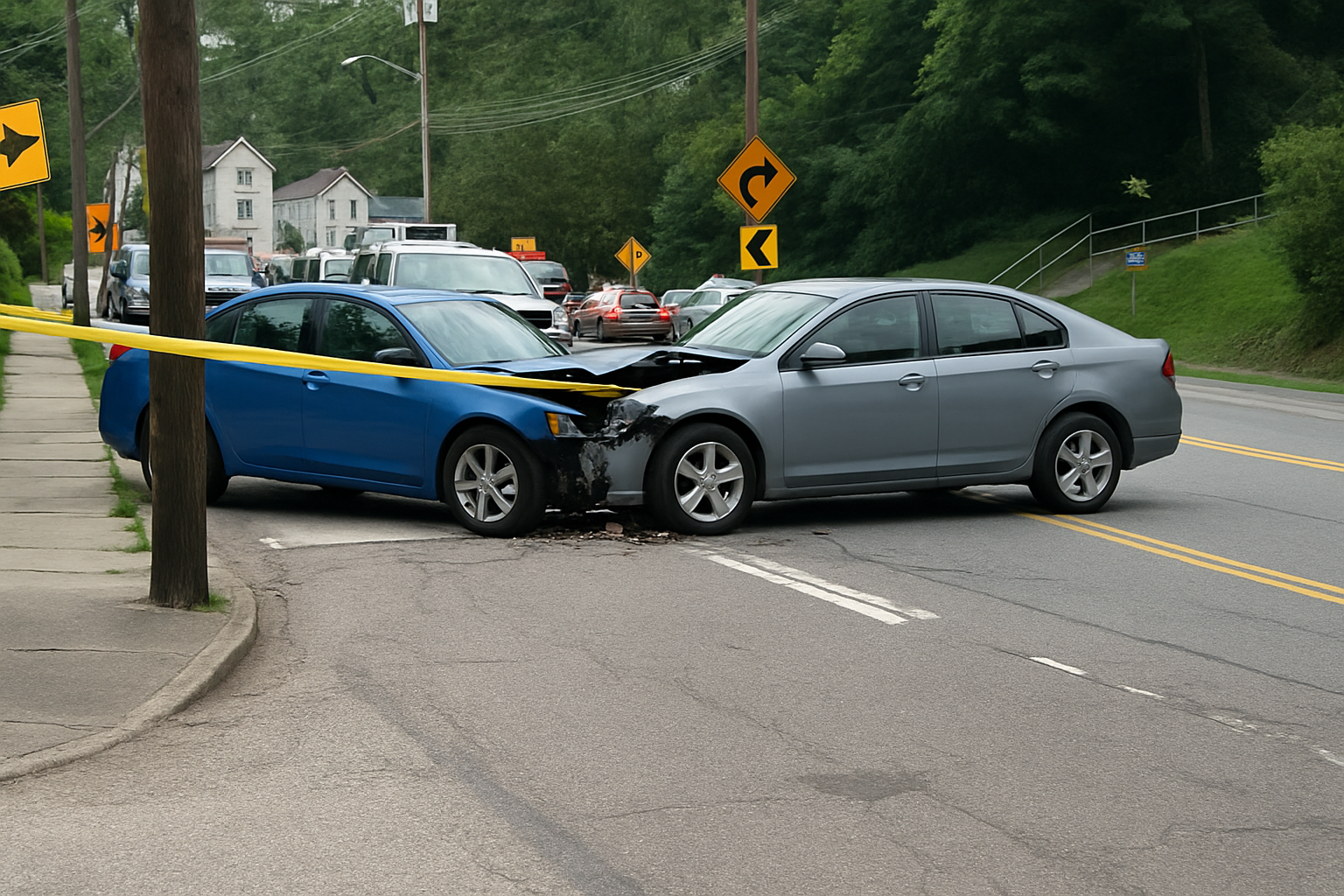
New Hampshire doesn't mandate SR-22 for most violations — but fleeing an accident scene triggers court-ordered SR-22 filing, extended suspension, and carrier rejections. Here's how to get covered.
Why New Hampshire Hit and Run Convictions Trigger SR-22 Despite Voluntary Insurance Laws
New Hampshire is the only state in the U.S. that doesn't require all drivers to carry auto insurance. Most residents operate under a "show proof of financial responsibility" system — meaning you can legally drive without insurance as long as you can post a bond or demonstrate assets. But hit and run convictions erase that flexibility entirely.
When you're convicted of fleeing an accident scene (RSA 264:25), the court or New Hampshire Division of Motor Vehicles (DMV) typically mandates SR-22 filing as a condition of license reinstatement. The conviction creates a presumption of high risk that triggers mandatory financial responsibility requirements — usually for 3 years from your reinstatement date. You cannot satisfy this with a bond or self-insurance; you need an active SR-22-backed auto insurance policy from a licensed carrier.
This creates a gap: New Hampshire doesn't set bodily injury liability minimums like other states, so the SR-22 filing requirement defaults to the state's financial responsibility minimums — $25,000 per person and $50,000 per accident for bodily injury, plus $25,000 for property damage. Most carriers writing SR-22 policies in New Hampshire will require at least these limits, though some high-risk insurers may offer higher minimums to offset their underwriting risk.
The practical impact: you're now navigating a non-standard insurance market in a state where most drivers don't carry coverage at all. Expect fewer carrier options, higher premiums, and a 1–3 year period before standard insurers will consider you again. non-standard auto insurance
License Suspension Timeline and SR-22 Filing Requirements After Conviction
Hit and run convictions in New Hampshire carry an automatic license suspension ranging from 60 days to 1 year for a first offense, depending on whether the accident involved injury or property damage only. If you left the scene of an accident causing injury, the suspension typically extends to 1 year. If you have prior violations or a DUI on record within the past 5 years, expect the suspension to reach the maximum.
The DMV won't reinstate your license until you satisfy three conditions: completion of the suspension period, payment of a reinstatement fee (currently $100 as of 2024), and filing of an SR-22 certificate with the New Hampshire DMV. The SR-22 must remain active and uninterrupted for the full duration mandated by the court — typically 3 years from reinstatement, though judges can extend this to 5 years in aggravated cases.
You cannot file the SR-22 yourself. Your insurer submits it electronically to the DMV once your policy is active. If you let the policy lapse or cancel it before the 3-year period ends, the carrier notifies the DMV within 10 days, and your license is re-suspended immediately. Reinstatement after a lapse requires starting the SR-22 clock over — meaning a 30-day lapse 2 years into your requirement resets you to day one of a new 3-year period.
Most drivers don't realize the filing requirement starts after reinstatement, not after conviction. If your suspension lasts 6 months, your SR-22 obligation begins the day you're eligible to drive again — not the day you were convicted. Plan for a minimum 3.5-year total timeline from conviction to SR-22 completion. SR-22 insurance coverage
What SR-22 Insurance Costs After a Hit and Run in New Hampshire
New Hampshire SR-22 premiums after a hit and run conviction typically range from $150 to $350 per month for minimum liability coverage, depending on your age, location, and whether you have additional violations. If you're under 25 or have a DUI or multiple at-fault accidents on record, expect rates at the higher end — often $300–$400/month.
The SR-22 filing fee itself is modest — usually $25 to $50, paid once at policy inception or annually depending on the carrier. The real cost driver is the conviction: hit and run violations signal high risk to underwriters, often triggering rate increases of 80–150% compared to a standard driver profile. If you also carried no insurance at the time of the accident (a separate violation in New Hampshire after certain triggering events), carriers add another 20–40% surcharge.
Not all insurers write SR-22 policies in New Hampshire. Standard carriers like State Farm, Geico, and Progressive may decline to renew your policy after a hit and run conviction, forcing you into the non-standard market. Carriers that do accept SR-22 filings with hit and run convictions include The General, Direct Auto, and regional high-risk specialists. You'll need to compare quotes from at least 3–5 non-standard insurers to find acceptable rates — premiums can vary by $100/month or more for the same coverage.
Rates typically begin to drop after 3 years if you maintain continuous coverage and avoid new violations. Expect a 20–30% reduction once the conviction falls outside the 3-year lookback window most carriers use for underwriting. Full return to standard rates usually requires 5–7 years of a clean record.
Which Carriers Write SR-22 Policies for Hit and Run Convictions in New Hampshire
New Hampshire's voluntary insurance system limits the number of carriers willing to write SR-22 policies, especially for drivers with hit and run convictions. Standard carriers typically won't renew after conviction, and some won't write new policies if you disclose a recent hit and run during the application process.
Non-standard insurers that actively write SR-22 policies in New Hampshire for hit and run drivers include The General, Direct Auto, Bristol West, and Infinity. These carriers specialize in high-risk profiles and file SR-22 certificates electronically with the DMV. You'll need to call or apply online directly — most don't participate in general quote aggregators.
Some regional carriers, including Safety Insurance and Concord Group Insurance, may accept SR-22 filings for hit and run convictions if you have no additional major violations in the past 5 years. These carriers often require higher down payments (25–50% of the 6-month premium) and may not offer payment plans longer than 3 months initially.
If you're repeatedly declined, consider applying through an independent agent who specializes in high-risk placements. Agents with access to surplus lines carriers can sometimes place drivers in non-admitted markets, though premiums run 30–50% higher than standard non-standard rates. This is a last-resort option, but it ensures you can meet the SR-22 requirement and get your license back.
Avoid lapses at all costs. A single missed payment that cancels your policy resets your entire SR-22 filing period and re-suspends your license. Set up automatic payments and maintain a 30-day buffer in your account to prevent accidental lapses.
How to Reduce SR-22 Costs and Transition Back to Standard Coverage
You can't eliminate the SR-22 requirement before the mandated period ends — but you can reduce premiums during the filing period and position yourself for standard coverage once the conviction ages off your record.
Start by increasing your deductibles. If you're required to carry only liability coverage, this doesn't apply — but if you financed a vehicle and need comprehensive and collision, raising your deductible from $500 to $1,000 can reduce premiums by 10–15%. Ask your carrier about usage-based insurance programs that track mileage and driving behavior; some non-standard insurers offer 5–15% discounts for low-mileage drivers who complete the monitoring period without hard braking or speeding events.
After 12 months of continuous coverage, request quotes from at least two other non-standard carriers. Rates vary significantly even within the high-risk market, and your initial carrier may not offer renewal discounts. Switching carriers mid-SR-22 period is allowed — just ensure the new insurer files the SR-22 before your old policy cancels to avoid a lapse.
Once you reach the 3-year mark from conviction (not from reinstatement), start quoting with standard carriers again. Some will write you immediately if you've maintained continuous coverage and have no new violations; others require 5 years from conviction. Progressive and National General are often the first to re-enter the standard market for drivers transitioning off SR-22.
Keep proof of your SR-22 filing and continuous coverage for at least 6 years. If the DMV disputes your filing history or claims a lapse occurred, you'll need documentation from your insurer showing uninterrupted coverage. Request an insurance history letter annually from each carrier you've held a policy with during the SR-22 period.
What Happens If You Move Out of New Hampshire During Your SR-22 Period
If you relocate to another state before your SR-22 requirement ends, the obligation follows you — but the rules change based on your new state's SR-22 laws and insurance minimums.
New Hampshire will terminate your in-state SR-22 filing once you register a vehicle and obtain a license in your new state. However, you must immediately establish an SR-22 filing in the new state to avoid triggering a suspension notice back to New Hampshire's DMV. Most states honor out-of-state SR-22 transfer requests, but you'll need to provide proof of the New Hampshire conviction and court order to your new insurer.
Your new state's liability minimums may exceed New Hampshire's $25,000/$50,000/$25,000 standard. For example, if you move to California, you'll need to meet California's $15,000/$30,000/$5,000 minimums — but most carriers will require higher limits to offset the SR-22 risk. Expect your premium to change based on the new state's rate environment and your new ZIP code's loss history.
Some states impose longer SR-22 filing periods than New Hampshire. If you move to Florida, which typically requires 3 years of SR-22 for major violations, and New Hampshire only mandated 3 years, you're bound by New Hampshire's original timeline — not Florida's standard. However, if your New Hampshire court order specified 5 years and Florida only requires 3, you're still obligated to file for the full 5 years per the original conviction terms.
Notify your New Hampshire insurer and the DMV within 10 days of relocating. Failure to establish continuous SR-22 coverage in your new state can result in an administrative suspension in New Hampshire that complicates future license transfers or renewals. compare high-risk quotes